
The Clock Is Ticking, But the Walls Aren’t Rising
When your dream home is delayed, it isn’t just the construction that gets put on hold. Sometimes, life does too.
TL;DR
- Interior project delays affect more than construction schedules. They can disrupt family plans, finances and the emotional anticipation of moving into a new home.
- Inadequate planning, unclear responsibilities, late approvals and inconsistent communication can contribute to avoidable delays.
- Detailed scheduling, realistic timelines, coordinated teams and regular progress updates help make projects more predictable.
- When a project is already delayed, homeowners should seek a documented revised schedule while protecting workmanship and quality standards.
Hi there,
Tanu here from Tanish Dzignz.
Let me ask you something. Have you ever walked into your under-construction home, looked at the dust-covered floors, dangling wires and half-finished corners, and wondered when it would finally feel like a home?
Perhaps you had imagined celebrating a festival there, hosting your first dinner party or watching your children settle into their new rooms. Maybe you had already started picturing where the sofa would go and how the morning light would fall across your bedroom. Yet weeks turn into months, and the house still looks much the same.
I’ve seen how quickly the excitement of creating a home can give way to exhaustion. Every delayed delivery, postponed installation and unanswered message takes a little more out of you. And when you have already invested so much emotionally and financially, being told to wait another week can feel like the last straw.
Because when a home project runs behind schedule, it isn’t just the handover date that changes. It is the life you had planned around it.
When Delays Steal More Than Just Time
I remember meeting Rohit and Anjali, a couple who had been looking forward to creating their forever home. Anjali had thought through every detail, from the grain of the wardrobe wood to the colour of the kitchen backsplash. Each decision had been made with care, and you could tell how much this home meant to them.
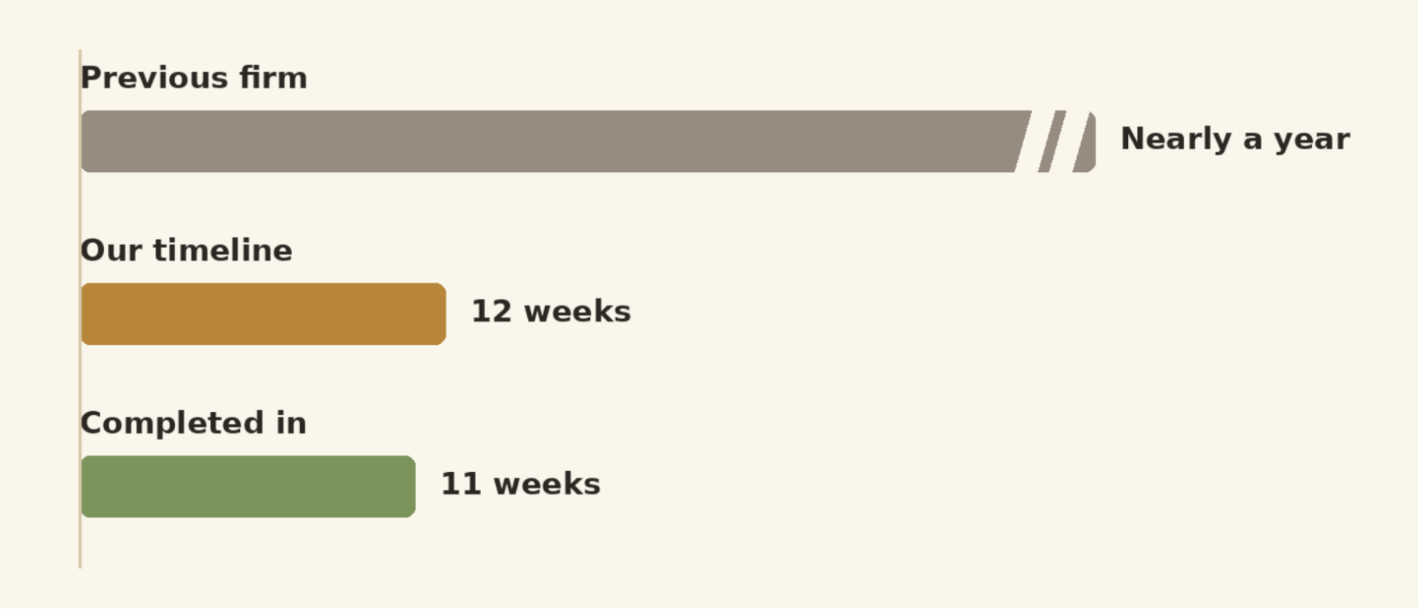
But by the time they approached us, their excitement had faded. Their previous interior design firm had allowed what was supposed to be a 12-week project to stretch into nearly a year. Festive seasons had passed, birthdays had come and gone, and their housewarming had been postponed twice.
Anjali said something that stayed with me: “It’s not the house. It’s how we feel stuck, waiting to start living again.”
I understood what she meant. A home renovation or interior fit-out is rarely an isolated project. Families plan around it. Some are paying rent while managing a home loan. Others are coordinating a move, arranging school admissions or preparing for a new chapter in their lives. When the project gets delayed, all these plans can be affected.
And then there is the emotional toll of not knowing. Is the work progressing? Has the material arrived? Will the contractor turn up tomorrow? Is the promised completion date still realistic?
The uncertainty can become almost as exhausting as the delay itself.
Why Do Interior Projects Fall Behind Schedule?
Of course, not every delay can be avoided. Unexpected site conditions, material shortages, changes in scope and external disruptions can affect even a carefully planned project. Sometimes, a decision that seemed straightforward on paper reveals a practical complication once the work begins.
But many frustrating delays arise from problems that could have been anticipated or managed better.
Planning that starts too late. Work begins before the design is fully resolved, material specifications are confirmed or vendor schedules are coordinated. The team then finds itself making decisions in the middle of execution, often while other work is waiting.
Unclear ownership and accountability. When several vendors and contractors are involved, it may not be clear who is responsible for a particular task or what needs to happen before the next stage can begin. One missed handover can affect several activities that follow.
Decisions and approvals without clear deadlines. Sometimes, work comes to a standstill because a material, finish or design detail has not been finalised. Without an agreed process for decisions, small pending items can accumulate into a significant delay.
Poor communication. Homeowners are left chasing updates, receiving vague answers or hearing about problems only after a deadline has passed. Even when a delay is unavoidable, a lack of communication makes it much harder to manage.
There is another factor that deserves attention: the homeowner’s peace of mind. A project team may be focused on tasks, quantities and deadlines, but the family living through the process is also dealing with disruption, uncertainty and postponed plans.
A well-managed project needs to account for both.
A Better Approach Begins Before the First Tile Is Laid
At Tanish Dzignz, we believe that thoughtful interior design is about more than choosing beautiful materials and creating attractive spaces. The planning, coordination and communication behind the finished home matter just as much.
Here are some of the principles that help make the process more predictable.
1. Plan the Work Before Starting It
A project timeline should be more than a date written on a proposal. It needs to reflect the actual work involved, the sequence of activities, the availability of materials and the dependencies between different stages.
Design decisions, material selections, vendor coordination and site requirements should be addressed as early as reasonably possible. If a particular finish has a long lead time, for example, it should be identified before the project reaches the stage where that finish is required.
This does not eliminate every surprise, but it reduces the number of problems that arise simply because nobody planned far enough ahead.
2. Set Realistic Timelines
It is tempting to promise a very short completion period, particularly when everyone is eager to get started. But an optimistic date is of little use if it does not account for the actual scope of work.
A realistic timeline should consider the size and complexity of the project, material procurement, the availability of skilled workers, installation requirements and time for inspections or corrections. It should also leave some room for unexpected issues where appropriate.
Just as importantly, everyone should understand what the timeline assumes. Changes to the approved design, late material selections or additional work may affect the schedule, and those implications should be communicated clearly.
The goal is not to promise that nothing will ever go wrong. It is to plan responsibly and respond promptly when something does.
3. Keep Communication Consistent
One of the most frustrating things about a delayed project is having to chase people for basic information.
Homeowners should not have to guess whether the flooring has arrived or whether the carpenter is scheduled to visit the site. Regular updates make it easier to understand what has been completed, what is happening next and whether anything needs attention.
At Tanish Dzignz, our approach includes regular progress communication and visual updates so that clients can follow the work, including when they cannot be physically present at the site. The exact frequency and format can be agreed according to the project, but the principle is simple: clients should know where things stand.
When a problem arises, it is better to communicate it early, explain its likely impact and discuss the next steps than to wait until the original deadline has passed.
4. Coordinate the People Behind the Project
An interior project brings together several moving parts. Designers, contractors, carpenters, electricians, plumbers, painters and material suppliers may all need to work in a particular sequence.
If that sequence is not coordinated, one team may arrive before the site is ready, another may have to return to redo work, and a third may be left waiting for materials. These interruptions can add time and cost without making any visible progress.
Clear responsibilities, agreed schedules and regular coordination help reduce these avoidable gaps. They also make it easier to identify where a delay has originated and what needs to happen to get the project moving again.
5. Make Room for the Human Side of the Process
This is the part I feel particularly strongly about.
When clients are anxious about a delay, they do not always need another technical explanation. Sometimes, they need someone to listen, acknowledge the disruption and tell them honestly what can be done next.
Creating a home is personal. It involves money, family decisions, expectations and often a great deal of anticipation. A professional team should recognise that reality rather than treating every concern as just another item on a project checklist.
Good communication cannot magically make a delayed delivery arrive sooner, but it can help clients feel informed, involved and supported while the issue is being resolved.
What If Your Home Project Is Already Delayed?
If your project has been running behind schedule, the first step is to establish a clear picture of where things stand. You do not need to accept vague assurances indefinitely, but it helps to approach the conversation with specific questions.
Ask for an updated schedule that identifies completed work, pending activities, material requirements and the tasks that are holding up progress. Request clarity on who is responsible for each pending item and when the next update will be provided.
It is also worth distinguishing between work that is genuinely blocked and work that can continue in parallel. Not every delay needs to stop the entire project, although changes to the sequence should be assessed carefully to avoid compromising quality or creating rework.
If the original completion date is no longer realistic, ask for a revised date based on the current position rather than another optimistic estimate. Make sure important decisions, changes and commitments are documented so everyone is working from the same understanding.
Above all, resist the temptation to rush every remaining task simply to recover lost time. Poorly coordinated work or skipped quality checks can create problems that are even more frustrating once you move in.
The objective is to regain control of the project, not simply to make the site look busy.
A Happier Ending Begins With Better Planning
Let me return to Rohit and Anjali.
When we took on their project, we worked towards a 12-week timeline. The home was completed in 11 weeks, and the relief on their faces at handover was something I still remember.
Their housewarming finally took place. There were fairy lights, laughter and the kind of warmth that makes a house feel like a home. Anjali hugged me and said, “You gave me back my peace.”
That meant more to me than any compliment about the interiors.
Of course, every project has its own requirements, and timelines depend on factors that cannot always be controlled. But their story reinforced something I have always believed: planning, accountability and honest communication are not administrative details. They are part of the care we owe our clients.
The finished home matters enormously, but so does the journey that takes you there.
Your Home Shouldn’t Feel Like a Construction Site Forever
If your interior project is stuck in limbo, or you are hesitant to begin because you have heard too many stories about endless delays, I understand the concern. You are not simply commissioning a set of rooms. You are investing in a place where you hope to build the next chapter of your life.
At Tanish Dzignz, we approach interior design with an emphasis on planning, quality, transparency and keeping clients informed throughout the process. From the early design decisions to material coordination and execution, we want you to understand what is happening and feel confident about the choices being made.
We cannot promise that every project will be free of unexpected challenges. What we can do is recognise the importance of your time, communicate honestly and work through problems with care and accountability.
Your home should be something you look forward to coming back to, not a project that leaves you wondering when life will finally begin.
Let’s make the journey towards it a little clearer, calmer and better planned.