So Many Choices… But What Feels Right?
How to Fall in Love with Your Home Materials Without Losing Your Mind
Executive Summary
- Choosing materials for your home can feel overwhelming when you are faced with endless colours, finishes, textures and price points.
- The right materials should reflect your lifestyle, maintenance preferences, budget and aesthetic rather than simply follow current trends.
- A well-curated shortlist, physical samples and thoughtful planning can make material selection easier and help prevent costly changes later.
- At Tanish Dzignz, we approach material selection by understanding how you live first, then helping you find finishes that bring together beauty, practicality and personal style.
Have you ever walked into a tile showroom full of excitement, only to walk out wondering how choosing a floor could possibly involve so many decisions?
One minute, you’re looking at inspiration pictures and imagining your dream home. The next, you’re comparing countertop finishes, debating between two almost identical shades of beige and wondering whether you really need to understand the difference between every type of laminate.
I call this the material selection meltdown. And if you’ve been through it, you’re certainly not alone.
At Tanish Dzignz, I’ve seen homeowners begin this stage of their interior design journey full of enthusiasm, only to feel exhausted by the sheer number of choices. The problem isn’t that they don’t know what they like. Often, it’s that there are simply too many options, and nobody has helped them narrow those choices down to what genuinely suits their home.
When Pinterest Meets the Reality of Material Selection
Let me tell you about Riya and Sameer, a young couple who approached us after receiving the keys to their first home. They were excited about the possibilities and had already put together mood boards, colour palettes and ideas for different rooms. They had a fairly clear picture of how they wanted their home to look.
Then came the material selection stage.
We were discussing kitchen finishes when Riya, with a mixture of laughter and frustration, asked, “I just want a countertop that doesn’t stain. Why are there forty-two options for that?”
I understood exactly what she meant. What had started as an enjoyable process was becoming a series of decisions that seemed to multiply every time we resolved one.
This happens because material selection isn’t simply about choosing what looks attractive. You’re weighing appearance against durability, maintenance, cost, availability and how each material will work with everything around it. A finish that looks beautiful in isolation may not be the most suitable choice for your kitchen, while a practical material may need to be paired carefully with other elements to achieve the look you want.
The answer isn’t to spend more time looking at more options. It’s to identify what matters most and make the choices from there.
You’re Not Just Choosing Materials. You’re Choosing How You’ll Live.
Think about your kitchen countertop. You might love a particular finish, but if you cook every day, stain resistance and ease of cleaning will probably matter just as much as its appearance. If you have young children or pets, flooring and upholstery may need to withstand considerably more everyday wear than they would in a home used less intensively.
The same applies to lighting, cabinetry and wall finishes. A glossy surface might look striking in a showroom but show fingerprints more readily in your home. A delicate fabric could be perfect for a formal sitting room but less practical for the sofa where everyone gathers for movie nights.
This is why I believe material selection should begin with a conversation about your life, not a visit to the showroom.
For homeowners planning luxury interiors in Gurgaon or Delhi NCR, the goal isn’t simply to select expensive materials. It’s to find the right combination of aesthetics, performance and comfort for the people who will live with them. A beautiful home should support your routines rather than introduce a new list of things to worry about.
How We Make Material Selection Easier at Tanish Dzignz
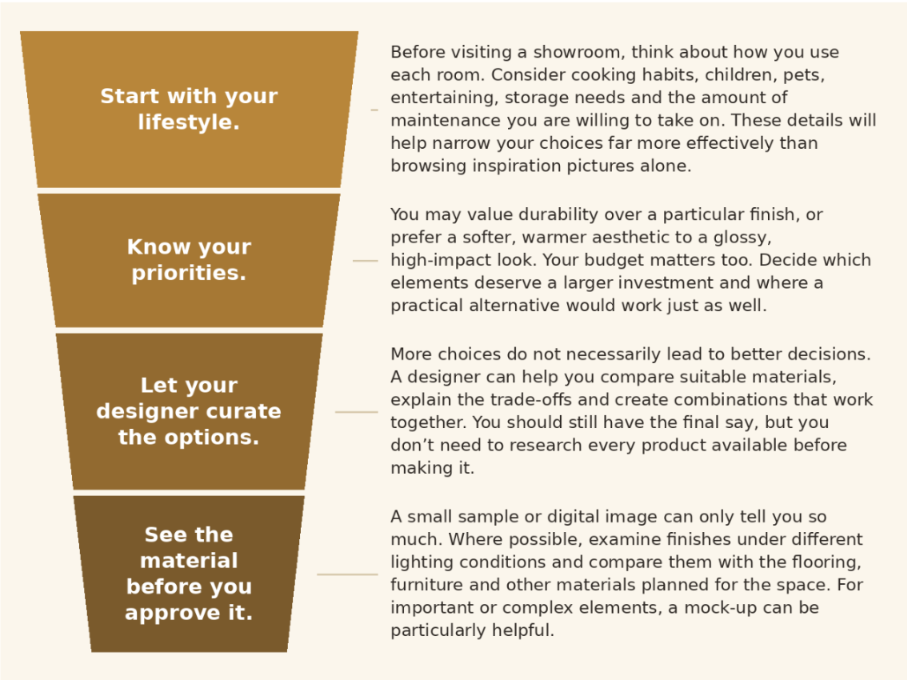
Our approach begins with understanding the homeowner. Before narrowing down finishes, we consider how the space will be used, what the family needs from it, the kind of atmosphere they want to create and how much maintenance they are comfortable taking on.
Someone who loves cooking may need a different set of kitchen materials from someone who uses the kitchen occasionally. A family with children may prioritise easy-to-clean finishes, while another homeowner may be happy to invest in more delicate materials for a particular visual effect.
Once we understand these priorities, we can curate a more manageable selection. Instead of presenting endless possibilities, we focus on options that suit the brief, work within the budget and complement the overall design.
We also encourage homeowners to see important materials in person wherever possible. Colours and textures can look different under showroom lighting, natural daylight and the warm lighting used in a bedroom or living room. Physical samples, larger material pieces and mock-ups can help you understand how a finish will look in context before committing to it.
The aim is not to remove you from the decision-making process. It is to make sure you have the information and clarity you need to make decisions confidently.
Four Things to Remember Before Choosing Your Finishes
These steps may seem simple, but they can make the entire process feel more manageable. They also help reduce the likelihood of discovering a mismatch after the material has been purchased, manufactured or installed.
The Right Choice Is the One That Works for You
One of the things I want homeowners to understand is that there isn’t always a single perfect material. There may be several good options, each with its own advantages. The right decision depends on what you value most and how the material fits into the larger design.
You don’t need to know every technical detail about acrylic, veneer or plywood before beginning your interior project. You do, however, deserve clear explanations about what is being recommended, why it suits your home and what you can expect from it in terms of appearance, maintenance and longevity.
At Tanish Dzignz, we believe that guidance is an important part of the design process. Our role is to bring together your preferences, practical requirements and the overall vision for your home, then help you navigate the choices without losing sight of what you wanted in the first place.
Whether you’re furnishing a new apartment or planning a complete home renovation in Delhi NCR, material selection should feel like a step towards your dream home, not an examination you need to pass.
So, if you’re currently staring at a dozen countertop samples or wondering whether the flooring you’ve shortlisted is really the right one, take a breath. Return to the way you want to live, the things that matter most to you and the feeling you want your home to create.
The rest becomes easier when you have a clear direction.
Because at the end of the day, the best materials aren’t necessarily the most expensive or the most fashionable. They’re the ones that make sense for your home and continue to feel right long after the last sample has been put away.
FAQs