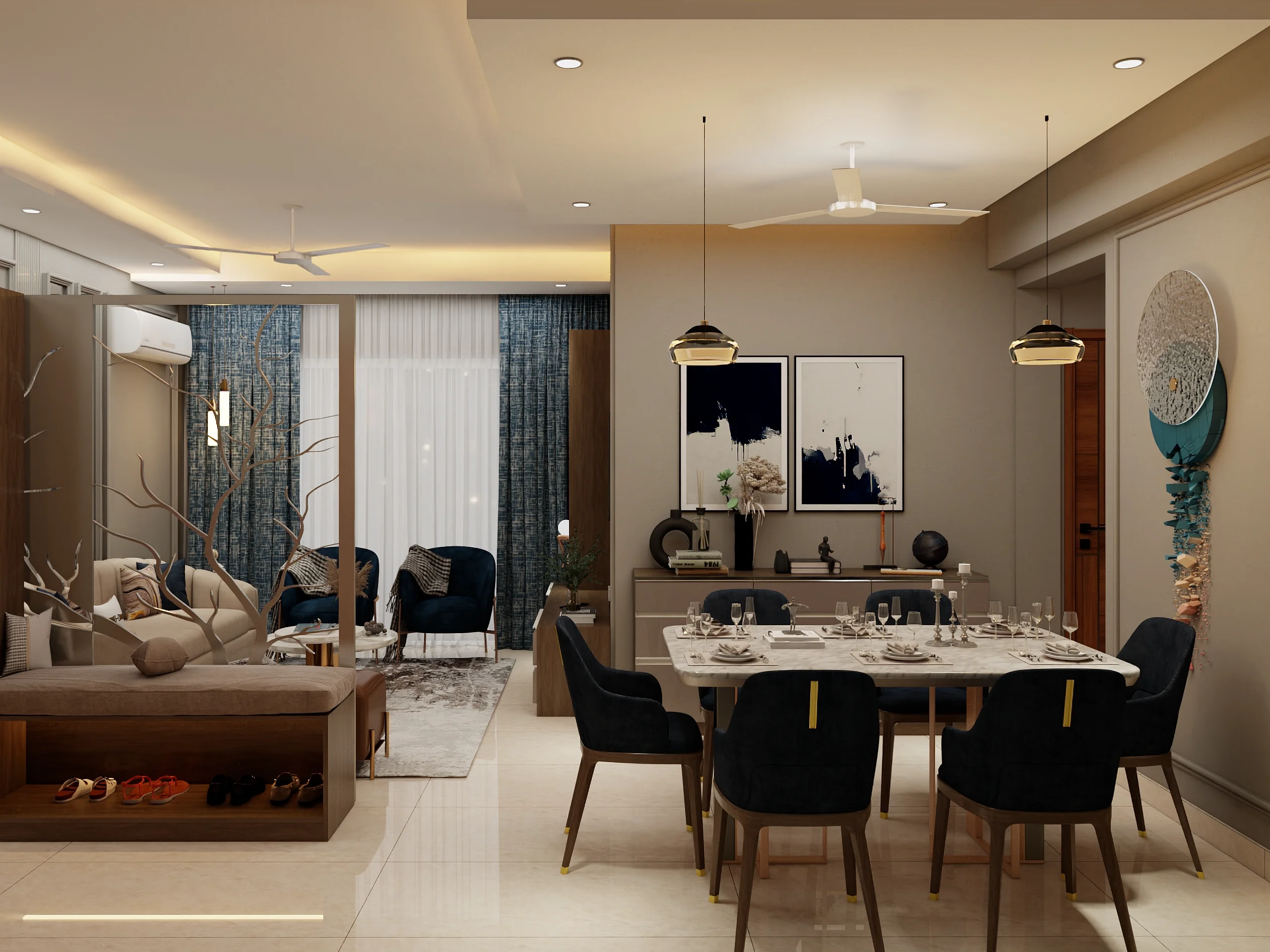
Designing with HeartExecutive Summary
- Sustainable interior design does not have to mean compromising on beauty, comfort or luxury.
- Material selection, energy-efficient lighting, durability and thoughtful sourcing can all contribute to more responsible homes.
- Choosing materials carefully can also support long-term maintenance and reduce the need for frequent replacement.
- Tanish Dzignz approaches sustainable interiors as part of a larger design process that considers lifestyle, quality, longevity and personal values.
Have you ever stood in a store holding a beautiful cushion, piece of furniture or tile sample and wondered, “But how was this made? Is there a better choice I could make?”
That question matters.
When you are designing a home, you are not only deciding how it will look. You are deciding what you want to live with every day, what you want to maintain over the years and, increasingly, what values you want your home to reflect.
For many homeowners, sustainability is part of that conversation. They want beautiful interiors, but they also want to make more thoughtful choices about materials, energy consumption, longevity and what comes into their home.
The good news is that these choices do not have to sit on opposite sides of the table.
Sustainability Can Be Part of Beautiful Design
At Tanish Dzignz, we often meet homeowners who assume that choosing sustainable or eco-friendly options means giving something up.
Perhaps the material will not look as refined. Perhaps the choices will be limited. Perhaps the home will feel less luxurious.
But thoughtful design can approach the question differently.

Instead of asking, “How do I make my home sustainable?” we can ask, “How can I make better choices without losing the beauty and comfort I want?”
That might mean looking at the materials used for furniture, considering energy-efficient lighting, exploring eco-friendly alternatives or thinking carefully about whether something needs to be replaced at all.
Sometimes, the most sustainable decision is simply to create something that you will genuinely love and continue to use for many years.
I remember working with a young mother who wanted her home to feel calm, warm and easy to live in.
She had a toddler, a demanding job and a very clear concern: she wanted the choices made for her home to feel responsible without making everyday life more difficult.
We looked at the project through that lens.
Material choices were considered alongside durability and maintenance. Lighting was planned with energy use in mind. Existing pieces were considered for possible reuse rather than automatically being replaced. Finishes were selected not only for their appearance but also for how they would work with the family’s everyday routines.
The result was not a home that looked “sustainable” in the conventional sense.
It simply looked like a beautiful, comfortable home that had been thoughtfully designed.
And that distinction is important.
Sustainability does not need to announce itself from every corner of a room.
What Does Sustainable Interior Design Actually Look Like?
There is no single formula.
For one homeowner, it may mean choosing materials with a longer useful life. For another, it may mean reusing an existing piece of furniture that carries personal meaning. Someone else may prioritise energy-efficient lighting or explore more eco-friendly material options.
A thoughtful interior design approach can consider questions such as:
- Can an existing piece be restored, adapted or reused?
- Is this material durable enough for the way the room will be used?
- Are there lower-impact alternatives worth considering?
- Can lighting be planned to make better use of natural light and energy-efficient systems?
- Will the design still feel relevant several years from now?
- Is the material easy to maintain, or is it likely to need frequent replacement?
These questions connect sustainability with something homeowners already care about: creating a home that works well for a long time.
Sustainable Choices Should Still Feel Like You
This is where personalisation becomes important.
A sustainable home should not look like it came from a fixed catalogue of “eco” choices.
Your home may be contemporary and minimal. It may have handcrafted furniture, traditional details and natural textures. It may combine modern technology with materials that have a sense of warmth and history.
The design should still reflect you.
That also means we do not believe every decision needs to be perfect. Sometimes, one thoughtful choice leads to another.
You might retain an existing piece instead of replacing it. You might choose a durable material instead of one that needs to be changed frequently. You might invest in better lighting design so the home makes better use of natural light and energy-efficient systems.
Over time, those choices add up.
How We Approach It
Our approach starts with transparency.
When a material or finish is being considered, we want you to understand what you are choosing and why it is suitable for your home. Material selection is already an important part of the education our clients seek, along with understanding longevity and maintenance.
Depending on the project, this can include:
- Exploring sustainable or eco-friendly material options
- Considering durability and expected maintenance
- Looking at whether existing furniture can be reused or adapted
- Planning lighting with energy consumption and natural light in mind
- Choosing designs with long-term relevance rather than short-lived trends
- Balancing material choices with the home’s aesthetic and functional requirements
The aim is not to make sustainability another box you have to tick. It is to make it part of better decision-making.
Your home says something about how you live.
It can reflect your taste, your routines, your family, your memories and even the values you want to carry into the future.
If sustainability matters to you, it deserves a place in that conversation.
You do not have to choose between a beautiful home and a more conscious one. With thoughtful planning, the two can support each other.
At Tanish Dzignz, we believe good interior design should give you more than a beautiful room. It should give you clarity about what you are choosing, confidence in how it will work and a home that continues to serve you well.
Because perhaps the most meaningful kind of luxury is knowing that the home you love today can continue to feel right for many years to come.
Frequently Asked Questions