Why thoughtful integration of appliances and fittings matters more than you think, and how to get it right
In This Guide, You’ll Learn
Appliance-fit problems usually start when cabinetry is finalized before appliances are chosen.
A few millimeters of miscoordination between vendors, carpenters, and designers causes most fitting issues.
Future upgrades, like a chimney you plan to add later, need to be accounted for during design, not after.
Tanish Dzignz plans appliances and fittings into drawings from day one, not as an afterthought.
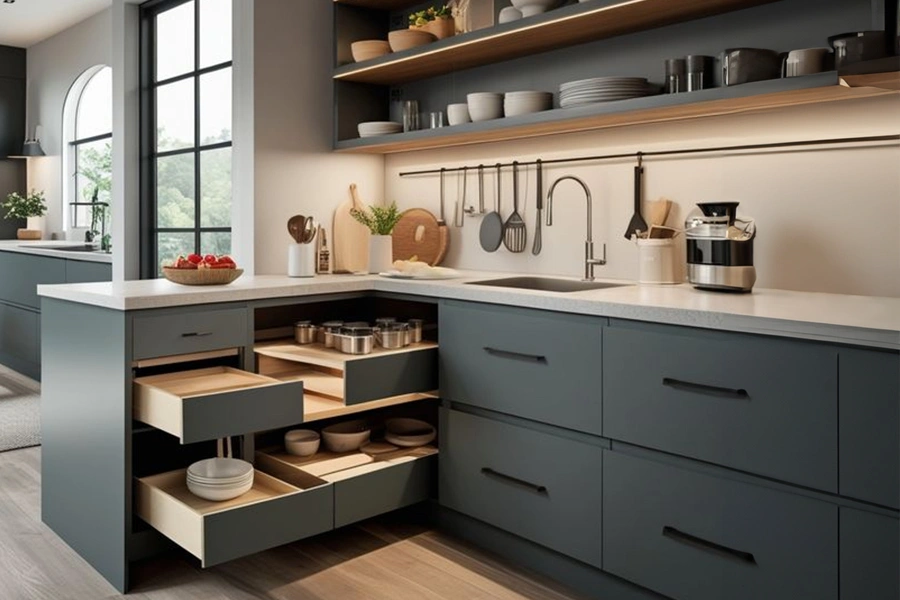
Your dream kitchen is finally ready, with sleek drawers and elegant counters, and then the fridge arrives and sticks out like a sore thumb. Or the stylish oven you handpicked refuses to nestle into its niche. If this has happened to you, it is not your fault.
Why Fitting Issues Actually Happen
Designing a home is not a neat, predictable puzzle. Real homes evolve with your life, and the problem usually starts when design happens in isolation from the products that will live within it.
Fittings and appliances picked after the cabinetry is already finalized
Inaccurate specs or lack of coordination between vendors, carpenters, and designers
Future upgrades, like an eventual chimney, not accounted for in the original plan
Why This Is About More Than Fitting In
Appliances and fittings may seem purely functional, but they play a real role in how a space feels day to day. A few millimeters of misalignment can throw off an entire kitchen’s sense of harmony.
The Dishwasher That Changed the Layout
“A client dreamed of a pristine, handle-less kitchen, designed down to the shadow gaps and satin-finish shutters. Late in the project, she found a dishwasher she loved during a sale, but it had not been planned for. Instead of asking her to compromise, the lower cabinetry was reworked with a custom panel to match her shutters, and the dishwasher disappeared beautifully into the design.”
Reactive Approach
A Planned Approach
Appliances chosen after cabinetry is finalized
Appliances factored into drawings from day one
Cutout specs estimated or generalized
Exact cutout specs, power points, and service access planned early
Future upgrades ignored until needed
Future-proofing built into today’s layout
Late changes mean visible compromises
Custom panels and reworks preserve the original design intent
How We Get Appliance Fit Right
Design Around Your Lifestyle, Not Just Your Space
We start with how you live, your habits, tools, and future upgrades, so design follows your story.
Early Planning Is Everything
Appliances and fittings are factored into drawings from day one, with exact cutout specs, power points, and service access.
Custom Does Not Mean Complicated
Cabinetry is tailored around your chosen products seamlessly, whether it is a slim hob or a chunky farmhouse sink.
Good Design Makes Things Feel at Home
You deserve to walk into your kitchen, bathroom, or utility area and feel ease, with no awkward gaps, no visible wires, and no retrofitted fixes. Good design is never just about fitting things in. It is about making them belong.
Tanish Dzignz factors appliances and fittings into drawings from day one, including exact cutout specs and power points, which keeps the space looking intentional even when plans change mid-project.