Dust Settles on Dreams: Navigating Construction Without Losing Your Peace
How thoughtful planning can protect your lifestyle, routines, and sense of home while your space takes shape
Executive Summary
- Renovation can disrupt routines, privacy, comfort, and family life long before the finished home takes shape.
- Construction planning should consider how a family will live through the project, not only what needs to be built.
- Clear timelines, site management, temporary storage, and designated calm zones can make the transition easier.
- At Tanish Dzignz, we believe the process of creating a home should respect the life already happening within it.
Have you ever started a home renovation full of excitement, only to find yourself a few weeks later navigating dust, noise, delays, and meals eaten wherever you can find a quiet corner?
If you’re about to begin a renovation, you may already be wondering how you’ll manage the disruption. And if you’re living through one right now, you probably know that the hardest part isn’t always choosing tiles or approving drawings.
It’s keeping your everyday life going while your home is changing around you.
At Tanish Dzignz, I’ve spoken with many families who have faced exactly this challenge. Their biggest concern isn’t whether the finished home will look beautiful. It’s a much more personal question:
“How do we live through this without feeling like we’ve lost our home before it’s even finished?”
That question matters because a home is more than its rooms and finishes. It is where your routines happen. Where you have your morning chai. Where children play, grandparents rest, and families come together at the end of the day. When construction disrupts all of that for months, the emotional impact can be much greater than most people expect.
The Emotional Side of Construction
Renovation is often planned as a physical project. We think about demolition, carpentry, electrical work, flooring, painting, and installation. We create schedules and budgets around these activities.
What we don’t always plan for is the effect that construction has on the people living through it.
Your morning routine changes because the kitchen is unavailable. Privacy becomes harder when workers are moving through the house. Dust settles on surfaces almost as quickly as you clean them. Noise can affect work, rest, and children’s routines. Even simple decisions can start to feel exhausting when you’re already dealing with constant disruption.
I’ve had clients tell me,
“Tanu, I just want my life back.”‘
A homeowner, partway through a long renovation
on the emotional side of living through construction
I understand that feeling.
The home you’re renovating is still your home, even when parts of it are covered in protective sheets and filled with tools. The challenge is finding ways to preserve some sense of normality while the transformation is underway.
What We Often Forget to Plan For
When people prepare for an interior project, they usually think about the visible requirements: materials, furniture, lighting, finishes, and budgets. Yet the practical experience of living through construction deserves the same attention.
For families with young children, elderly parents, or people working from home, even a seemingly manageable project can affect everyday routines significantly. Privacy can become harder to maintain. Dust and noise can make certain areas uncomfortable. Important belongings may need to be packed away, while everyday essentials still need to remain accessible.
There is also the mental fatigue.
When your home is constantly changing, you may find yourself making decisions every day, adjusting routines, answering questions, and dealing with unexpected developments. Over time, even small disruptions can begin to feel overwhelming.
The answer isn’t to pretend that construction will be completely stress-free. It is to plan for the disruption instead of discovering it along the way.
Designing Around the Life That Already Exists
One of the simplest things you can do is create a small area that remains untouched by construction for as long as possible.
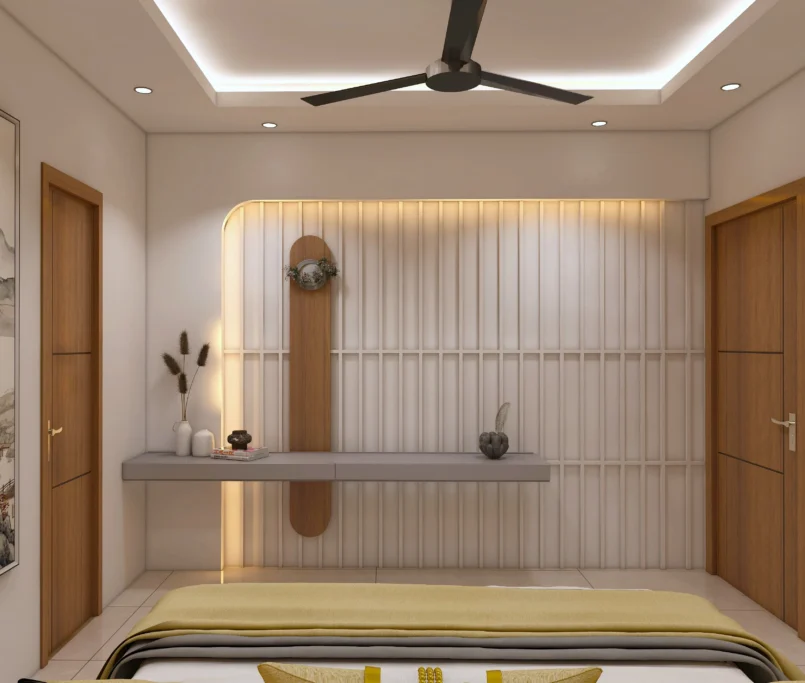
It doesn’t need to be an entire room. It could be a bedroom, a reading corner, or simply a part of the home where you can sit quietly at the end of the day. Keep the things you associate with comfort there: familiar lighting, a favourite chair, books, cushions, or anything else that helps the space still feel like yours.
The same principle applies to routines.
Before work begins, talk to your designer and project team about the parts of your day that cannot easily be disrupted. Perhaps your family needs access to a particular bathroom in the morning. Perhaps a child needs a quiet space for afternoon naps. Perhaps you work from home and need uninterrupted hours during the day.
These details may not appear on an architectural drawing, but they are part of designing responsibly for real life.
Small Planning Decisions Can Make a Big Difference
Site management also plays an important role in keeping a home liveable during construction. Work can be organised zone by zone rather than allowing the entire home to become a construction area at once. Temporary partitions can help separate active work areas from occupied spaces, while regular cleaning can prevent dust from spreading unnecessarily.
Storage deserves attention too.
When furniture and belongings are moved around repeatedly, everyday life becomes harder if you cannot find what you need. Keeping essential items labelled and accessible can save a surprising amount of frustration.
And then there is communication.
Your family should know what is happening, and your project team should understand what matters to your family. A simple conversation about upcoming work, expected noise, temporary access restrictions, or changes to routine can prevent a lot of unnecessary stress.
Good project planning isn’t only about keeping work moving.
It is also about helping people keep living.
A More Considerate Way to Build
At Tanish Dzignz, we believe the experience of creating a home should be considered alongside the finished design.
Every family has a different rhythm. Some have young children. Some have elderly parents. Some members work from home. Others may be living in the house throughout the renovation.
Those realities should influence how the project is planned.
We don’t want the construction phase to feel like your life has been put on hold. Where possible, we plan around existing routines, organise work thoughtfully, communicate changes clearly, and pay attention to the small practical details that can make a difficult phase easier to manage.
Because when someone entrusts us with their home, they are also entrusting us with a part of their everyday life.
That responsibility extends beyond the final photographs.
Your Home Is Changing. Your Life Doesn’t Have to Stop.
If you’re preparing for a renovation, it is worth asking a few questions before the work begins.
Which parts of your daily routine are most important to protect? Where will you work, sleep, eat, and relax during different stages of the project? Which belongings need to remain accessible? Are there children, elderly family members, or pets whose routines need special consideration?
The answers can shape the way the project is planned.
Construction will still involve dust. There will still be noise, decisions, and days when things don’t go exactly as expected. But thoughtful planning can prevent those disruptions from taking over your entire experience.
And eventually, the dust settles.
The tools disappear. The protective sheets come down. The furniture returns to its place. You switch on the lights for the first time and realise that the home you’ve been imagining is finally there.
That moment should feel like a return to yourself, not simply the end of a construction schedule.
At Tanish Dzignz, we believe that’s what thoughtful interior design should make possible: a beautiful home, created with care, while respecting the life and people within it.
Because we’re not just building walls and wardrobes.
We’re creating the setting for everything that happens inside them.
Frequently Asked Questions
Plan the project around your essential routines, create protected areas within the home, use temporary partitions, maintain regular site cleaning, and keep communication open with your project team.
It depends on the scale of the project and the areas being renovated. If you remain at home, your designer and project team should understand your daily routines and plan work accordingly.
Identify their essential routines in advance and plan work zones, timings, access, and quiet areas around those needs. Keeping some parts of the home functional can make the transition easier.
Good site management helps control dust, noise, movement of workers, storage, and cleaning. This can make the construction phase more manageable for families living through the project.
Discuss your daily routines, work-from-home requirements, children’s or elderly family members’ needs, areas that must remain accessible, storage requirements, and any periods when construction disruption needs to be limited.